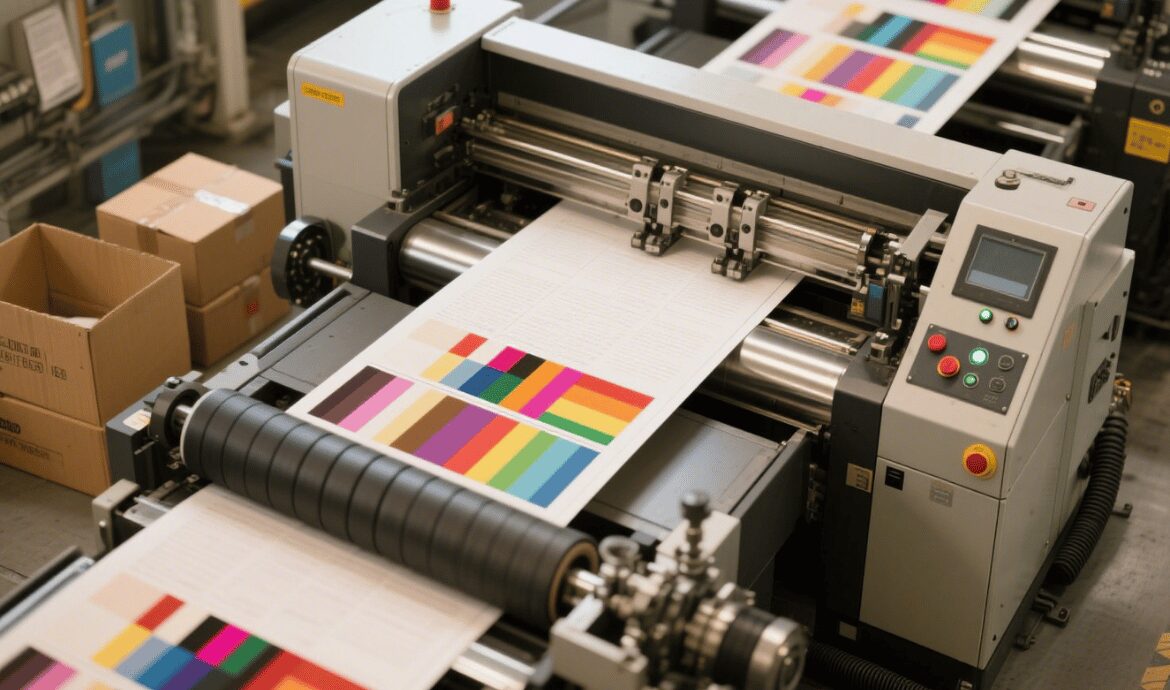
Introduction
In today’s fast-paced, visually driven world, the importance of eye-catching, high-quality prints cannot be overstated. From bold advertising banners to intricate architectural blueprints, large format printers are the silent workhorses behind much of the visual media we encounter daily.
These advanced machines have evolved into essential assets across numerous industries, transforming the way professionals produce large-scale graphics, designs, and documents. Whether you’re exploring a bustling trade show, admiring a storefront display, or navigating a hospital or university campus, chances are that large format printing has played a role in shaping your experience.
| Category | Details |
|---|---|
| Definition | Printers designed to produce high-quality prints on media larger than 24 inches wide. |
| Other Names | Wide-Format Printers, Large-Scale Printers |
| Common Width Range | 18 inches to over 100 inches |
| Primary Applications | Banners, posters, blueprints, signage, vehicle wraps, retail displays, textiles, art reproductions |
| Key Industries | Architecture, Engineering, Construction, Advertising, Photography, Retail, Education, Event Planning |
| Types of Printers | Aqueous Inkjet, Solvent, Eco-Solvent, Latex, UV, Dye-Sublimation |
| Ink Types | Water-based (Aqueous), Solvent-based, Latex (Water + Resin), UV-curable, Dye-Sublimation |
| Supported Materials | Paper, Vinyl, Canvas, Fabric, Polyester, Film, Metal, Wood, Glass, Acrylic |
| Print Resolution | Typically 1200–2400 DPI |
| Output Speed | Varies widely; some models print several hundred sq. ft. per hour |
| Advantages | High-resolution, large-scale output, versatile media support, fast production, long-lasting, customizable |
| Disadvantages | High initial cost, requires space, ongoing ink/media costs, some need expert maintenance |
| Eco-Friendly Options | Latex and aqueous ink printers; recyclable media and energy-efficient designs |
| Maintenance Needs | Regular cleaning, printhead checks, software updates, ink and media replenishment |
| Top Brands | HP, Epson, Canon, Roland, Mimaki, Mutoh |
| Estimated Cost Range | $1,000 – $50,000+ depending on size, features, and type |
| Future Trends | AI-based automation, 3D integration, eco-ink innovation, cloud printing, expanded material compatibility |
Large Format Printers
Large format printers, also known as wide-format printers, are specialized printing devices designed to produce high-quality prints on larger media sizes, typically wider than 24 inches. These printers are frequently used in fields that require complex, colorful, and huge prints, like advertising, engineering, architecture, and graphic design.
Large format printers can handle a variety of tasks, from technical drawings and architectural blueprints to visually striking banners, posters, and signage. They support various media types, including vinyl, canvas, fabric, and photographic paper, and are available in different technologies such as inkjet, solvent, latex, and UV.
Known for their precision and speed, these printers offer excellent color accuracy and print resolution, making them ideal for both indoor and outdoor use. Whether you’re printing marketing materials or artistic reproductions, a large format printer delivers professional-grade results on a grand scale.
What Is a Large Format Printer?
Large format printers, often referred to as wide-format printers, are powerful devices engineered to produce prints that go far beyond the limitations of traditional desktop printers. While standard office printers typically support media up to 8.5 x 11 inches (A4 size), large format printers can accommodate widths starting at 18 inches and stretching to over 100 inches.
Used for creating everything from building wraps and exhibition displays to technical drawings and museum-quality art reproductions, large format printers cater to a diverse range of professional requirements. Their precision, speed, and scalability make them indispensable to modern visual communication.
Types of Large Format Printers
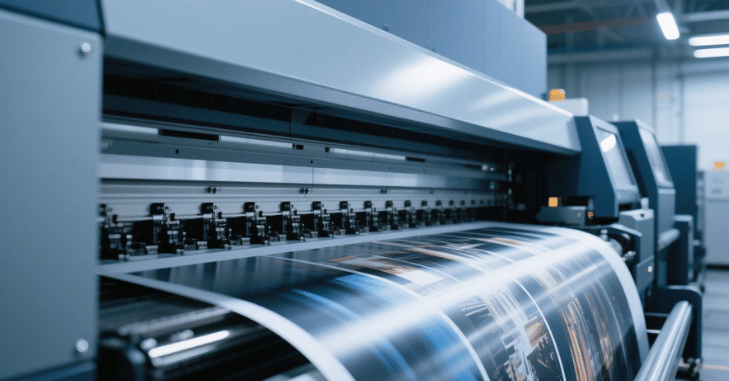
To better serve specific industry needs, large format printers come in a variety of models and technologies, each with its unique capabilities:
- Aqueous Inkjet Printers: These printers utilize water-based inks and are perfect for indoor applications where rich, vibrant colors and detailed resolutions are necessary. Popular among photographers, artists, and print shops, aqueous inkjet printers deliver stunning output on coated paper, canvas, and fine art media.
- Solvent and Eco-Solvent Printers: These printers use solvent-based inks and are known for their durability and weather resistance. They’re ideal for outdoor signage, vehicle wraps, and billboards. Eco-solvent variants offer lower toxicity and are more environmentally friendly, making them suitable for indoor-outdoor hybrid uses.
- UV Printers: These printers cure their ink using ultraviolet light, allowing printing on virtually any flat or roll-fed surface. UV printers provide unmatched versatility from wood and glass to metal and plastic. They also offer instant drying and are known for their scratch-resistant finishes.
- Dye-Sublimation Printers: Highly specialized, dye-sub printers are commonly used in textile printing and soft signage. They work by transferring dye onto materials such as polyester fabric using heat, resulting in vibrant, long-lasting prints perfect for custom apparel, home décor, and promotional items.
- Latex Printers: Combining the benefits of solvent and water-based technologies, latex printers use odorless, water-based inks that are both durable and environmentally safe. They are increasingly used in retail and interior décor applications.
Key Features and Benefits
The growing popularity of large format printers can be attributed to their advanced features and tangible benefits:
- Exceptional Resolution and Detail: These printers can deliver up to 2400 dpi or more, producing crisp text, sharp images, and accurate color representation.
- High-Speed Output: Many large format models are optimized for speed, capable of printing several hundred square feet per hour, making them ideal for high-demand environments.
- Material Versatility: Whether you need to print on vinyl, film, mesh, fabric, foam board, or acrylic, there’s a large format printer suited for the job.
- Eco-Conscious Options: By introducing latex and eco-solvent inks, manufacturers are addressing the growing need for sustainable printing solutions.
Applications Across Industries
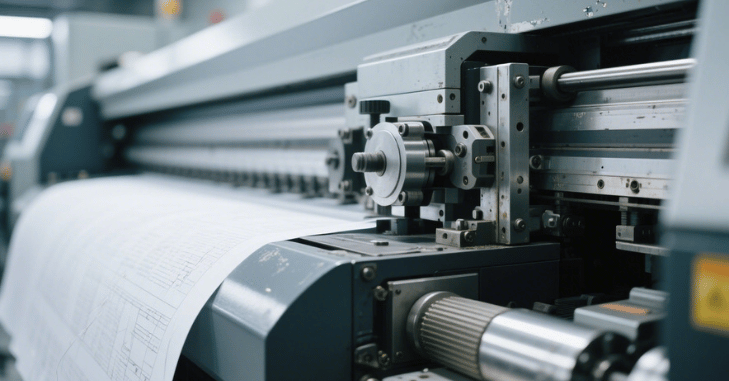
Large format printers are used in countless fields to solve unique visual and logistical challenges:
- Marketing and Advertising: Wide-format printing is critical for creating compelling visual marketing campaigns, from store signs and bus wraps to pop-up displays and banners.
- Architecture, Engineering, and Construction (AEC): Professionals in these fields rely on large format printers to generate blueprints, plans, schematics, and GIS maps with pinpoint accuracy.
- Retail: Point-of-purchase displays, promotional signage, and product packaging prototypes are just a few of the ways retailers use large-format printing to enhance customer experience.
- Education and Academia: Schools, universities, and libraries use these printers to produce maps, charts, educational diagrams, and event signage.
- Healthcare: Hospitals and clinics use them for wayfinding signage, patient information boards, and educational visuals.
- Fine Art and Photography: Artists and photographers utilize high-resolution wide-format printers to produce gallery-quality reproductions of their work.
- Event Planning: Event organizers use large format printers for stage backdrops, seating charts, sponsor signage, and photo booth props.
Cost and Return on Investment
Investing in a large-format printer can be a significant financial decision, with entry-level models starting at around $1,000 and industrial-grade machines exceeding $50,000. However, for businesses that frequently require banners, signage, blueprints, or promotional materials, owning an in-house printer can dramatically reduce outsourcing costs and improve turnaround times.
Over time, this can lead to greater profit margins, stronger quality control, and the ability to respond quickly to customer demands. For print shops, design studios, and advertising agencies, the return on investment often outweighs the upfront expense, especially when paired with efficient workflow management and regular maintenance.
Choosing the Right Printer
Selecting the perfect large-format printer involves more than just picking the biggest model. Here are key factors to consider. Determine whether your main need is photographic quality, durability, or versatility across materials. A small design studio may need only occasional large prints, while a commercial print shop requires consistent high-volume capability.
Ensure your printer is compatible with the materials you plan to use regularly. Each ink type offers different benefits, from vibrant colors to outdoor resistance to eco-safety. These machines vary significantly in size. Make sure your workspace can comfortably accommodate the printer. Evaluate not just the upfront cost but also ongoing expenses such as ink, media, maintenance, and energy consumption.
Future Trends in Large Format Printing
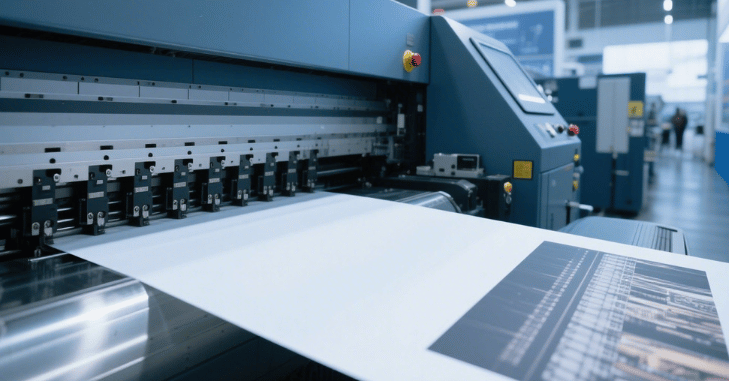
The future of large format printing looks promising as new technologies and market demands continue to shape the industry. Modern printers incorporate AI-based workflow automation, predictive maintenance, and cloud-based printing solutions. Expect further innovations in eco-friendly inks and recyclable media options.
Some manufacturers are merging large-format and 3D printing technologies for architectural and industrial applications. Software and hardware advances enable hyper-customized printing at large scales for décor, apparel, and retail.
Conclusion
Large format printers have fundamentally changed the way professionals across industries bring their ideas to life. Their ability to produce massive, detailed, and visually stunning prints opens up unimaginable creative possibilities with conventional printers. As they become more accessible and technologically advanced, the potential applications expand.
Whether you’re a graphic designer seeking bold visual impact, an architect needing precision blueprints, a retailer aiming for dynamic promotional displays, or an event planner creating immersive environments, a large format printer is an investment in both quality and capability. As visual communication becomes increasingly important in both digital and physical spaces, the role of large format printers will only continue to grow.
Want to know about ‘7 Nutrients That Can Help You To Conceive‘ Check out our ‘Daily bites‘ category.
FAQs
Basic models are user-friendly, but training is often recommended for complex setups or commercial use.
Printers that use latex and aqueous (water-based) ink are thought to be more environmentally friendly than those that use solvent-based ink.
If you print regularly or in bulk, owning a printer may save money long term.
formats include PDF, TIFF, JPEG, EPS, and PNG. Vector files (like AI or SVG) are often preferred for crisp scaling.