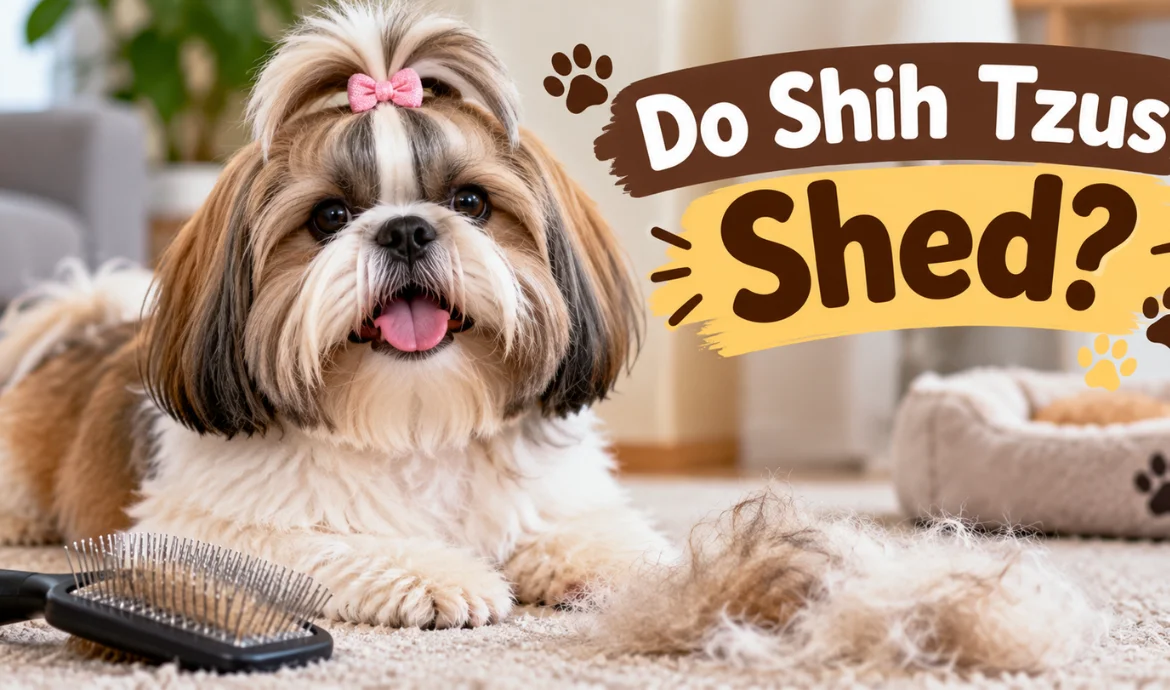
If you are asking “do Shih Tzus shed?” the answer is yes, but shedding is usually light. Their long coat grows continuously, so loose hairs often stay trapped until brushing removes them. That means less hair on furniture, but regular grooming is still essential.
| Question | Quick answer |
|---|---|
| Shedding level | Low compared with many dog breeds |
| Coat type | Long, dense, double coat with continuously growing hair |
| Visible loose hair | Often caught inside the coat until brushing |
| Brushing needs | Several times weekly, preferably daily for longer coats |
| Allergy status | No dog breed is truly hypoallergenic. |
| Vet concern | Sudden bald patches, itching, redness, or major hair loss |
Key Takeaways
- Shih Tzus are low shedders, not zero shedders.
- Their coat can trap loose hair, making shedding less noticeable around the home.
- Low shedding does not remove the need for frequent brushing and professional grooming.
- People with dog allergies can still react to dander and saliva.
- Sudden or patchy hair loss can signal a skin or health problem.
Why the Shih Tzu Coat Sheds So Little
The American Kennel Club breed standard describes the Shih Tzu as having a dense, long, double coat. Unlike many short-coated breeds, its hair keeps growing and needs routine trimming. This growth pattern helps explain why loose strands are less obvious around the house.
PetMD describes the breed as a minimal shedder with a coat that grows continuously. Loose hairs can remain caught among longer strands until you brush or comb them out. That is why a brushing session may produce more hair than you normally see on your couch.
Do Shih Tzus Shed a Lot?
No, most do not shed heavily during normal daily life. You may find a few hairs on clothing, bedding, or a brush after grooming. Owners usually notice far less loose hair than they would with many heavier-shedding breeds. The breed also usually doesn’t have the dramatic coat blowouts associated with many thick-coated working dogs.
Grooming still matters because trapped loose hair can contribute to tangles and mats. A low-shedding coat is therefore different from a low-maintenance coat.
What Low Shedding Means for Grooming
PetMD recommends brushing a Shih Tzu at least several times each week, with daily brushing preferred. Long hair can tangle around the ears, legs, chest, belly, and other friction points. Regular combing removes loose strands before they tighten into painful mats. A shorter pet trim can reduce daily coat work, but it does not change the hair-growth cycle.
Professional grooming also helps maintain coat length and areas around the face. For contrast, a Husky Pitbull mix inherits a much denser double coat that needs a different grooming routine.
| Coat choice | Visible shedding | Tangle risk | Home brushing |
|---|---|---|---|
| Long coat | Low | Higher | Usually frequent, often daily |
| Short pet trim | Low | Lower | Still regular, but usually easier |
Are Shih Tzus Hypoallergenic?
Low shedding can help keep loose hair from spreading across floors and furniture. It does not make any dog allergy-free, because people usually react to proteins in dander, saliva, and urine. The Asthma and Allergy Foundation of America says no truly non-allergic dog breed exists.
If allergies matter in your household, spend time with the individual dog before making a long-term commitment. Reactions can differ between people and between individual dogs. Anyone with asthma or strong allergy symptoms should discuss pet exposure with an allergist before adoption.
When Extra Hair Loss Can Be Normal
Puppies eventually replace their softer puppy coat with an adult coat. The AKC’s puppy coat guide says coat loss can begin between four and six months, though timing varies widely. Some dogs may start earlier, while others can keep changing until around one year old.
During that transition, you may notice more loose hair during brushing and more tangling than usual. Frequent gentle grooming can keep dead strands from collecting inside the coat. The change should not normally leave expanding bald patches or inflamed skin.
When Shedding May Signal a Problem
A sudden increase in hair loss deserves attention when it comes with other skin changes. VCA Animal Hospitals notes excessive shedding can accompany parasites, allergies, hormonal problems, digestive issues, or other illnesses. Itching, redness, greasy skin, scaling, or obvious bald spots are reasons to contact your veterinarian.
Normal shedding should not create large areas of exposed skin. Hair loss caused by scratching, licking, or irritation can also look different from routine coat turnover. A veterinarian can examine the skin and decide whether testing or treatment is needed.
How to Keep Loose Hair and Mats Under Control
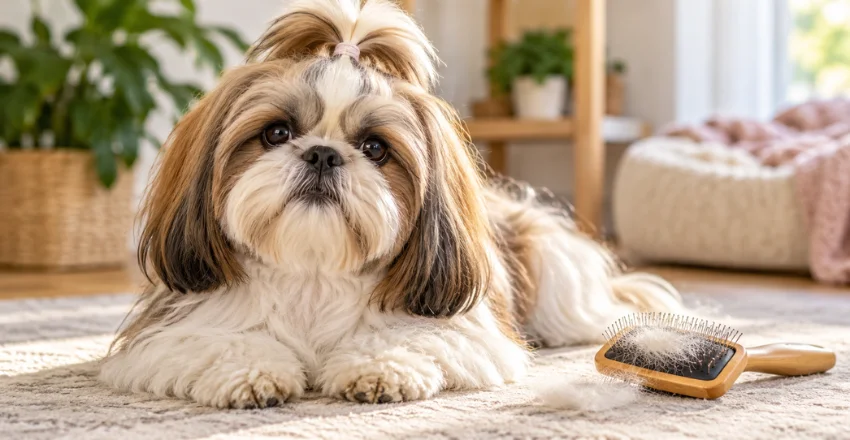
A simple grooming routine usually keeps household hair low and makes coat care more comfortable. Start with gentle handling, then reward calm behavior during brushing, combing, foot care, and face care. Ventweek’s dog training tips can help you build consistent handling habits.
- Brush to the skin instead of smoothing only the surface.
- Use a comb after brushing to find hidden tangles.
- Pay extra attention behind the ears and around areas of friction.
- Keep face hair controlled so it does not rub the eyes.
- Schedule professional grooming when the coat becomes too long to maintain safely.
Do not pull hard at tight mats, because that can hurt the skin underneath. A groomer can often remove difficult tangles more safely and choose an easier maintenance trim. If the skin looks sore or infected, contact a veterinarian instead of trying aggressive home detangling.
Is This Breed a Good Fit for a Low-Shed Household?
A Shih Tzu can suit owners who want less loose hair around the home. The tradeoff is steady brushing, trimming, and face care throughout the dog’s life. That balance matters more than the simple label “low shedding.” Families comparing companion breeds can also review Ventweek’s Goldendoodle family guide for another coat-and-lifestyle perspective.
Don’t choose a breed based on shedding alone; temperament, exercise, health, and grooming needs also matter. Choose the dog whose complete care profile fits your household.
Bottom Line
The Shih Tzu is a low-shedding breed, but its coat still needs consistent care. Regular brushing removes trapped loose hair and helps prevent mats before they tighten. Watch for sudden hair loss or skin changes, and ask your veterinarian when something looks abnormal. Ventweek has more dog and pet care guides if you want practical routines to follow.
Frequently Asked Questions
Do Shih Tzus shed more in summer?
They usually do not have a dramatic summer coat blowout like many heavy-shedding breeds. You may still notice small changes in loose hair as grooming, health, and coat condition change. A sudden major increase deserves closer attention, especially with itching or bald spots.
Why is my Shih Tzu suddenly losing more hair?
Extra hair can appear during a puppy coat change or after a period of neglect. Sudden patchy loss can also accompany skin irritation, parasites, allergies, or other health problems. Contact your veterinarian if the change is substantial or comes with skin symptoms.
Are Shih Tzus safe for people with dog allergies?
No dog is guaranteed to be safe for someone with a dog allergy. Lower shedding may reduce loose hair, but dander and saliva still carry allergy-triggering proteins. Test your reaction around the specific dog and seek medical advice for significant allergy or asthma concerns.
How often should I brush a Shih Tzu?
PetMD recommends brushing at least several times a week, preferably daily. Longer coats generally need more frequent attention because tangles form faster. A shorter trim can make brushing easier, but it does not remove the need for regular coat care.
Does a puppy cut stop shedding?
No haircut changes the natural growth cycle of each hair strand. A shorter trim can make loose hair easier to remove and reduce matting. It may also make home grooming faster for owners who do not want to maintain a long coat.