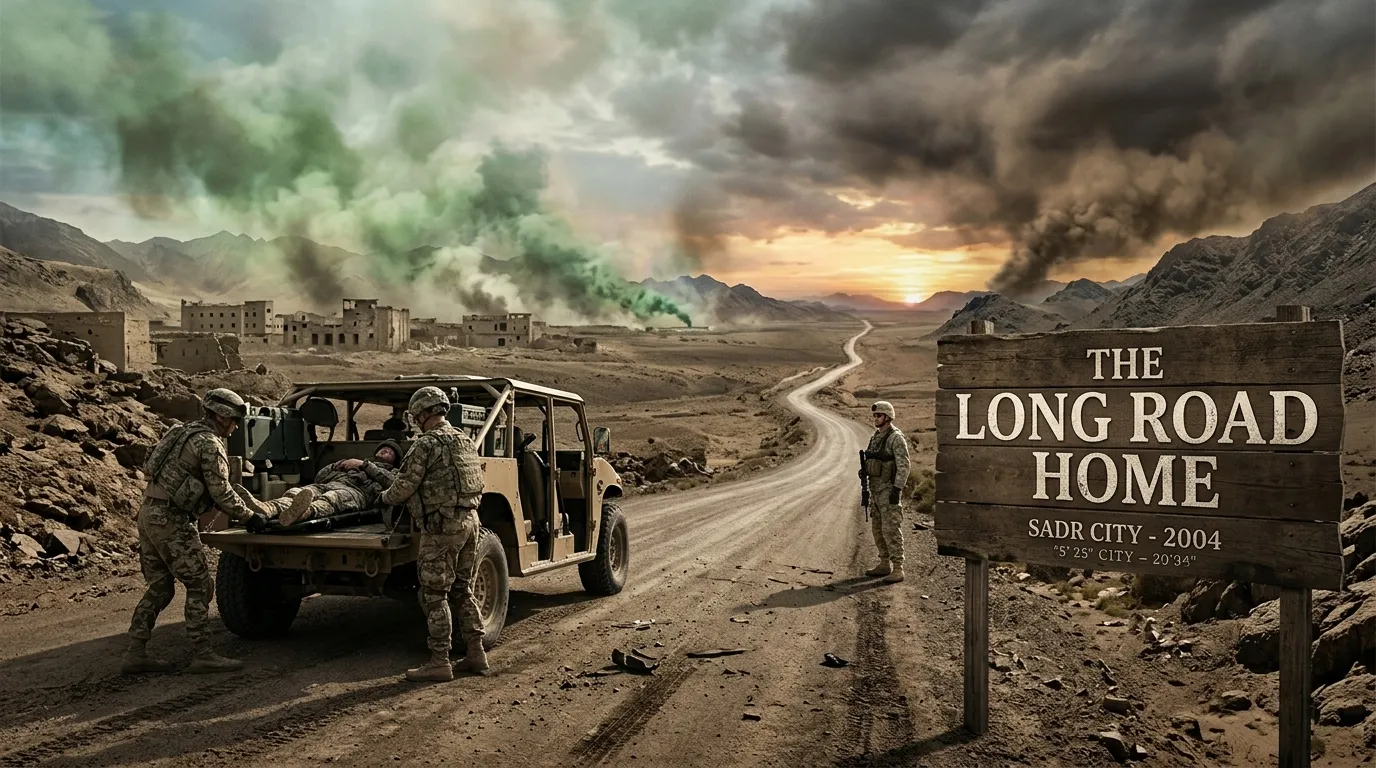
The Long Road Home tells a war story through soldiers, families, and the people caught between them. The National Geographic drama draws from Martha Raddatz’s nonfiction book about a deadly 2004 battle in Baghdad. Its focus extends beyond combat to the lasting human cost of one violent day.
The series centers on the events of April 4, 2004, during the Iraq War. U.S. soldiers from the 1st Cavalry Division encountered a major attack in Baghdad’s Sadr City. The battle became known as “Black Sunday” and shaped the lives of soldiers and families for years.
The Long Road Home at a Glance
| Detail | Information |
|---|---|
| Type | Historical military drama and limited series |
| Original network | National Geographic |
| Original release | 2017 |
| Source material | Martha Raddatz’s nonfiction book |
| Main setting | Sadr City, Baghdad, and the U.S. home front |
| Central event | The April 4, 2004 “Black Sunday” battle |
| Creator | Mikko Alanne |
| Notable cast | Michael Kelly, Jason Ritter, E.J. Bonilla, Kate Bosworth, Sarah Wayne Callies, Noel Fisher |
| Main themes | War, family, duty, grief, survival, and memory |
Direct answer: The Long Road Home is a historical drama based on Martha Raddatz’s account of American soldiers during the Iraq War. It follows the April 4, 2004 battle in Sadr City while showing what their families endured at home. The story connects battlefield survival with grief, uncertainty, and long-term consequences.
What Is The Long Road Home About?
The story begins as American troops settle into their deployment in Baghdad. A routine mission places a platoon in Sadr City, where fighters attack the soldiers. What follows becomes a desperate effort to survive and bring the trapped troops back.
The narrative does not stay entirely on the battlefield. It regularly returns to military families waiting for information thousands of miles away. That structure makes uncertainty at home part of the central story.
The series also follows commanders and rescue forces responding to the attack. Their choices unfold while information remains incomplete and conditions keep changing. Viewers therefore see the battle from several connected perspectives.
The True Story Behind the Series
The central battle occurred on April 4, 2004, in Sadr City, Baghdad. Members of the 1st Cavalry Division came under heavy attack during the early period of their deployment. The day later became widely remembered as Black Sunday.
Journalist Martha Raddatz later documented the experiences of people connected to the battle. Her reporting included soldiers who fought and families who waited for news. That work became the nonfiction book that inspired the television adaptation.
Raddatz has described meeting soldiers connected to the fighting during her reporting in Iraq. Their experiences led her toward a story focused on individuals rather than military policy alone. The resulting account examines what combat demanded from people on both sides of the deployment.
Eight U.S. soldiers died during the fighting connected with that day. More than 60 were wounded, according to U.S. Army and Raddatz accounts. Those losses give the television drama its historical foundation.
Why Black Sunday Matters to the Story
Black Sunday provides more than the series setting. It creates the event connecting soldiers, commanders, spouses, parents, and children. Each group experiences the same crisis through a different form of uncertainty.
The trapped troops face immediate threats and limited information. Rescue forces must reach them while facing dangerous streets and hostile fire. Families at home experience another kind of helplessness as they wait for confirmed news.
This structure separates the series from a simple battlefield drama. Combat remains central, but consequences receive comparable attention. The viewer sees how one battle reaches far beyond the people carrying weapons.
The Main Cast and Real-Life Characters
Michael Kelly portrays Lt. Col. Gary Volesky, the battalion commander responding to the unfolding crisis. Jason Ritter plays Capt. Troy Denomy, while E.J. Bonilla portrays Lt. Shane Aguero. These characters connect viewers to different levels of battlefield leadership.
Kate Bosworth plays Gina Denomy, and Sarah Wayne Callies portrays LeAnn Volesky. Their stories help show the pressures placed on military families during deployment. The home-front scenes also prevent the battle from becoming an isolated action narrative.
Noel Fisher portrays Pfc. Tomas Young, whose story carries consequences beyond the initial fighting. Jeremy Sisto appears as Staff Sgt. Robert Miltenberger. Jon Beavers, Jorge Diaz, Ian Quinlan, and Darius Homayoun also hold significant roles.
The cast portrays real people or characters connected closely with documented events. That foundation gives many scenes an added emotional weight. Viewers know the broader story did not begin in a writers’ room.
How the Book Became a Television Series
Raddatz’s book provided enough perspectives for a story larger than a conventional war film. A limited-series format allowed the adaptation to spend more time with individual soldiers and families. It could also move between Baghdad and the United States without reducing either setting to background material.
Mikko Alanne adapted the material for television and served as the series creator. National Geographic released the production in 2017. Directors and writers then shaped the source material into an episodic dramatic narrative.
Any dramatization of real events requires narrative choices. Dialogue, pacing, and scene construction may serve television storytelling even when major events come from documented history. Viewers should therefore distinguish the historical foundation from every dramatic detail shown onscreen.
What Makes the Series Different From a Typical War Drama?
Many military dramas build toward battles as their main payoff. This production starts with combat but keeps asking what happens around it. Family members, commanders, interpreters, wounded troops, and rescue forces all become part of the larger picture.
The series also spends substantial time on waiting. Families cannot see what is happening, yet every fragment of information can change their lives. That uncertainty creates tension without requiring constant battlefield action.
Another important perspective comes through Iraqi characters caught in the conflict. Their presence reminds viewers that Sadr City was also a civilian community. The battle affected people whose choices and risks differed from those facing American troops.
The Meaning Behind the Title
The title works on both a physical and emotional level. Soldiers want to survive their deployment and return to the people waiting for them. Yet returning home does not automatically end what happened during combat.
For survivors, the journey can continue through injury, grief, memory, and changing relationships. Families also carry experiences formed during periods of fear and uncertainty. “Home” therefore represents more than a destination on a map.
Raddatz’s later reflections support that broader reading. She has written about continued loss, healing, and remembrance among people connected with Black Sunday. The road home can remain unfinished long after a battle ends.
Major Themes the Story Explores
Duty and Brotherhood
Soldiers repeatedly face decisions involving personal danger and responsibility toward others. Rescue efforts show how military bonds influence choices during a crisis. Duty becomes something experienced through actions rather than slogans.
Families at War
The home-front storyline shows that deployment changes entire households. Spouses and parents must function while receiving limited or frightening information. Their experience provides a second perspective on the costs of combat.
Survival and Consequences
Survival does not mean every problem disappears after the shooting stops. Physical injuries can reshape a person’s future. Emotional memories can also remain long after a deployment ends.
Memory and Remembrance
The production asks viewers to remember the people behind casualty figures. Names, families, decisions, and personal histories replace abstract numbers. That approach gives historical events a more human scale.
Is the Series Historically Accurate?
The broad foundation comes from documented events and Raddatz’s reporting. The April 2004 battle, the units involved, and many central people are historical. U.S. Army accounts also document the heavy casualties suffered during the fighting.
The television version remains a dramatization rather than documentary footage. Scenes can combine researched information with reconstructed dialogue and dramatic pacing. Anyone researching Black Sunday should use historical records and Raddatz’s nonfiction reporting alongside the show.
That distinction does not reduce the value of the adaptation. Instead, it helps viewers understand what kind of source they are watching. The series can introduce the history while primary reporting provides deeper context.
Is The Long Road Home Worth Watching?
The series will likely interest viewers who prefer character-focused military dramas over action alone, and it sits well alongside the other entertainment coverage readers browse for show breakdowns. Its strongest emphasis falls on relationships, uncertainty, sacrifice, and the consequences surrounding combat. That approach gives the story emotional weight beyond individual battle sequences.
Viewers should expect intense war violence and difficult subject matter. The series deals with death, serious injuries, fear, and grieving families. Its TV-MA rating reflects material that may not suit every audience.
People interested in modern U.S. military history may also find useful context here. The production offers an accessible entry point into one significant episode of the Iraq War. Reading the original book afterward can provide a fuller nonfiction account.
Frequently Asked Questions
Is The Long Road Home based on a true story?
Yes, the central story is based on real events from the Iraq War. It draws from Martha Raddatz’s nonfiction reporting about Black Sunday and the people affected by it. The television production dramatizes that source material for an episodic series.
What happened on Black Sunday in 2004?
On April 4, 2004, U.S. forces faced intense fighting in Sadr City, Baghdad. Soldiers became trapped while other units attempted dangerous rescue operations. Eight U.S. soldiers died during fighting connected with the day, while more than 60 were wounded.
Who wrote the original book?
Journalist Martha Raddatz wrote the nonfiction book behind the television adaptation. Her reporting followed soldiers and families affected by the battle. The book connects events in Iraq with experiences on the American home front.
Where does the story take place?
Much of the combat story takes place in Sadr City, Baghdad. Other scenes focus on military families back in the United States. Moving between those settings shows two sides of the same crisis.
Is the show a documentary?
No, it is a scripted historical drama based on nonfiction reporting and real events. Actors portray soldiers, relatives, commanders, and other people connected with the story. Dramatic reconstruction means viewers should not treat every scene as a primary historical record.
Why the Story Still Has Meaning
War history can become a sequence of dates, places, and casualty figures. This story puts individual people back inside those facts. Soldiers, spouses, parents, and civilians each experience consequences that statistics cannot fully describe.
That human focus explains why the story remains relevant beyond its original 2017 release. It asks what happens after headlines move to another event. It also shows why returning home can be a beginning rather than an ending.
For readers discovering the series now, the next step is simple. Watch it with its historical basis in mind, then compare the drama with nonfiction accounts. That approach provides both the emotional narrative and the documented context behind Black Sunday.