In a world overflowing with images, the ones we choose to live with say more about us than we often realize. From the moment a viewer steps into a room, they begin reading its visual language — the light, the textures, and most of all, the art. And among the many ways to bring intentional beauty into a space, art prints remain one of the most accessible, versatile, and emotionally resonant options. There is more on this in Art of Custom-Tailored Suits.
But what exactly is an art print today? And why does it still matter?
Let’s take a step back. For centuries, prints were the way art traveled. Paintings stayed locked in palaces and museums, but woodcuts, lithographs, and later photographic prints moved through time and space. They hung in homes, were tucked into books, and passed from hand to hand. A print was never “just a copy” it was a statement. It was a decision to carry an image into one’s life.
In many ways, that meaning has only deepened. In the digital age, when we scroll past hundreds of images daily, the act of selecting artwork, printing it, and hanging it with intention becomes even more powerful. It’s not about possession — it’s about presence. About choosing to slow down, to connect with something visual and visceral, and to give it space in our lives.
What Makes a Great Art Print?
Contrary to common belief, a good art print is not merely a reproduction. It’s a carefully considered object — a physical embodiment of the artist’s vision. From the paper texture to the ink depth, the finish to the framing, every choice adds nuance to the viewing experience.
Collectors today are increasingly drawn to limited edition art prints, where each piece is signed, numbered, and produced in small batches. This doesn’t just increase the value; it preserves a sense of intimacy. You’re not just buying an image — you’re becoming part of a quiet, intentional dialogue between artist and collector.
But beyond rarity or prestige, the best prints are the ones that speak to something personal. That odd photograph you can’t stop thinking about. That surreal drawing that feels like it came from your dreams. The abstract form that somehow mirrors your confusion or clarity.
This emotional response is what separates an image on a screen from an artwork on your wall.
The Democratization of Art
One of the most beautiful things about art prints is their ability to make art truly democratic. You don’t need to attend auctions or own a gallery. You don’t even need to know art history. All you need is a feeling — a sense that a particular image belongs in your life.
For artists, prints open up new ways of connecting with their audiences. Instead of creating one-off works that disappear into private collections, they can offer a more sustainable model — one that allows people to own meaningful pieces at a lower price point without compromising artistic integrity.
This shift has also empowered more independent voices. Many emerging photographers, illustrators, and fine artists now release their own curated selections of art prints, bypassing traditional gatekeepers. These self-published works often carry a rawness, directness, and a sense of individuality that is difficult to find elsewhere.
Prints in the Interior Design World
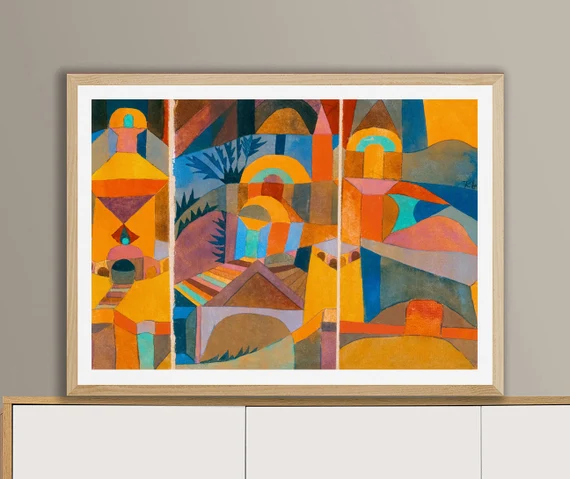
There’s also a practical side. In interior design, art prints offer extraordinary flexibility. They work across styles — minimalist, maximalist, eclectic, and industrial. You can layer them. Frame them. Lean them against a wall. Create salon-style clusters or hang one powerful piece with breathing room all around.
More importantly, they allow for evolution. You can shift pieces as your taste changes, or as the light in your home changes with the seasons. Unlike larger, immovable works, prints invite curation. They suggest a space that’s alive — in motion, in conversation with itself.
Designers often turn to prints to bring emotional texture into a room. Not just color or pattern but feeling. A single black-and-white art print can ground a chaotic space. A warm-toned photograph can soften a cold, modern interior. A surreal collage can introduce a touch of playfulness into an otherwise serious environment.
And because prints are affordable, they encourage experimentation. You’re not locked into a decision forever — you’re free to try, to rearrange, to reinvent.
Why Printed Art Still Holds Weight
The screen is fleeting. The print is not.
In an era where content disappears after 24 hours, the act of hanging an artwork — living with it — feels radical. It becomes part of your daily landscape. You see it while making coffee, brushing your teeth, walking by on your way out the door. And over time, it becomes not just decoration, but memory. Meaning. A quiet anchor.
That’s why art prints remain so relevant. Because they remind us to stop and look. Because they turn our spaces into reflections of who we are — or who we want to become.
And because, sometimes, the right image in the right place can shift the entire atmosphere of a room — and with it, the mood of a life.
Not a Conclusion, but a Beginning
Some images linger. Not because they shout, but because they whisper the right thing at the right time.
The best art print don’t just fill empty walls — they fill gaps in emotion, in memory, in presence. They are fragments of something larger, quietly doing their work in the background of our everyday life.
For those who seek not just to decorate but to inhabit their spaces more fully, the right print can be the first step. There are curated collections online that explore this philosophy, where images aren’t chosen for mass appeal, but for how they make you feel. Where each piece offers not just style, but atmosphere.
And sometimes, just browsing through such a collection can change the way you see your own space, or what you want it to become.