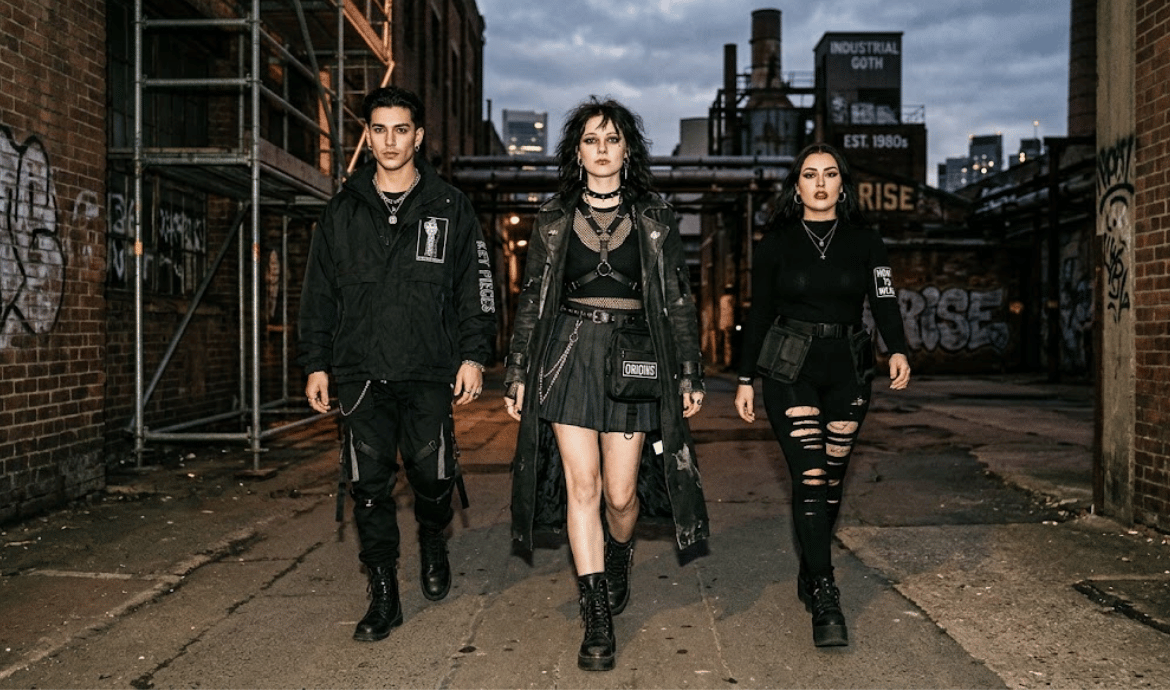
Industrial goth combines dark fashion with military utility, hard textures, and influences from industrial music culture. The look favors black, charcoal, metal hardware, heavy footwear, and practical layering. It feels sharper and more mechanical than romantic or Victorian gothic fashion.
You don’t need a wardrobe full of specialty clothing to make the style work. Start with dark basics, then add one or two structured statement pieces. The strongest outfits look deliberate, not overloaded.
| Element | Common Choices | Styling Goal |
|---|---|---|
| Colors | Black, charcoal, gray, olive | Build a dark, controlled base |
| Tops | Mesh shirts, fitted tees, tanks | Create texture without excessive bulk |
| Bottoms | Cargo pants, coated denim, utility trousers | Add structure and function |
| Outerwear | Military jackets, long coats, leather | Strengthen the silhouette |
| Footwear | Combat boots, platform boots | Give the outfit visual weight |
| Accessories | Harnesses, chains, belts, metal jewelry | Add mechanical details |
| Materials | Leather, PVC, mesh, nylon, distressed cotton | Create contrast and depth |
| Influences | Industrial music, punk, military wear | Keep the style culturally grounded |
Quick answer: This aesthetic mixes dark alternative fashion with military, punk, fetish, and industrial-scene influences. Build the look using black utility clothing, boots, metal hardware, textured layers, and restrained accessories. Keep the silhouette practical and structured, then personalize it with music-inspired details or futuristic elements.
What Is Industrial Goth?
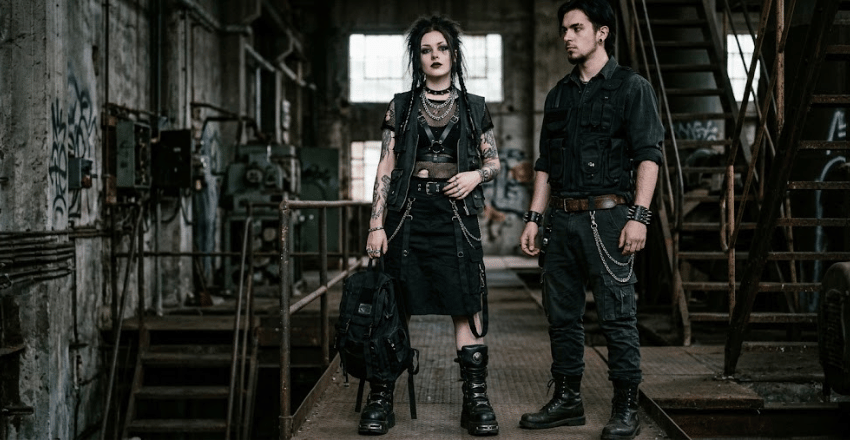
The term usually describes a dark aesthetic influenced by both goth fashion and industrial-scene clothing. Military shapes, hardware, leather, cargo trousers, and heavy boots commonly define the visual language. Modern styling may also borrow from techwear, streetwear, and club fashion.
The label requires some historical care because goth and industrial developed as separate music cultures. Their audiences later shared clubs, fashion ideas, and alternative spaces. That overlap helped create the blended style people recognize today.
Industrial music began independently from the post-punk movement that produced early goth. Goth emerged from late-1970s and early-1980s British post-punk culture. Industrial-related scenes developed their own sounds, communities, and visual codes.
Where the Style Came From
Early goth clothing inherited punk’s do-it-yourself approach and taste for altered secondhand clothing. Black garments, dramatic makeup, leather, and unconventional silhouettes became recognizable parts of the scene. Fashion remained flexible because participants often customized ordinary pieces themselves.
Industrial audiences developed a harder visual identity during the 1980s and 1990s. Military clothing, workwear, combat boots, and utilitarian accessories became especially visible. Electronic body music and industrial rock scenes strengthened that functional, machine-inspired image.
Rivethead culture became particularly associated with electro-industrial, EBM, and industrial rock audiences. Its clothing often mixed military styling, punk influences, and fetish-derived details. Calling every rivethead a goth therefore oversimplifies two related but distinct histories.
Industrial Goth vs. Rivethead vs. Cybergoth
These labels often appear together online, but they describe different cultural ideas. Their boundaries can overlap because real people rarely follow one rigid fashion rule. Knowing the differences still helps you build a more intentional outfit.
| Style | Typical Palette | Key Clothing | Overall Feel |
|---|---|---|---|
| Dark industrial style | Black, gray, gunmetal | Cargos, leather, harnesses, boots | Mechanical and severe |
| Rivethead | Black, olive, military tones | Combat trousers, military gear, boots | Utilitarian and scene-driven |
| Cybergoth | Black plus neon | PVC, platforms, synthetic accessories | Futuristic and rave-influenced |
| Trad goth | Mostly black | Draped pieces, leather, fishnet, pointed boots | Post-punk and dramatic |
Cybergoth became especially visible through late-1990s and 2000s club culture. Neon colors, synthetic hair, goggles, platforms, and futuristic accessories separated it visually. A darker industrial outfit usually keeps brighter accents under tighter control.
9 Key Pieces That Build the Look
You can create a convincing wardrobe without buying everything at once. Choose versatile pieces that work with clothing you already own. Add stronger accessories after the foundation feels balanced.
1. Black cargo pants: Look for structured pockets, straps, or adjustable details. 2. Combat boots: Choose a comfortable pair with enough support for regular wear. 3. Military-inspired jacket: Field jackets and structured coats add immediate shape. 4. Mesh top: Use mesh as a texture layer beneath tees, tanks, or outerwear. 5. Black leather jacket: Real or synthetic leather adds a harder surface contrast. 6. Utility belt: Pick practical hardware instead of adding several competing accessories. 7. Harness: A simple harness can create structure over a plain black shirt. 8. Metal jewelry: Chains, rings, and brushed silver finishes support the mechanical theme. 9. Dark graphic shirt: Band shirts or restrained graphics keep casual outfits grounded.
Loose cargo pants can also connect naturally with contemporary oversized dressing. VentWeek’s baggy clothes style guide explains how proportion affects wider silhouettes. That principle matters when heavy footwear and layered tops already add visual volume.
Three Easy Outfit Formulas
Everyday Casual
Start with a fitted black shirt and straight cargo trousers. Add combat boots and one silver chain or utility belt. Finish with a lightweight military jacket when the weather allows.
This formula works because every element has a clear purpose. Nothing competes for attention, yet the outfit still looks alternative. You can also replace cargos with faded black jeans.
Streetwear-Inspired
Pair oversized black outerwear with tapered utility pants and substantial boots. Keep the inner layer simple with a plain tee or mesh shirt. One metal accessory can connect the pieces visually.
Fans of relaxed urban outfits can borrow proportion ideas from VentWeek’s men’s street-style fashion guide. Streetwear techniques help darker outfits feel current without losing their identity. Layering also makes the look easier to adapt across U.S. seasons.
Club or Concert
Try coated trousers with a mesh layer and structured black outerwear. Platform boots or polished combat boots can give the outfit more presence. Add a harness only if the other hardware remains restrained.
Alternative club clothing can become uncomfortable when every layer is heavy. Favor breathable fabrics where possible, especially in warmer cities. Comfortable footwear also matters during long concerts or standing events.
How to Choose the Right Colors
Black provides the easiest foundation, but using only one flat black can hide every detail. Mix matte cotton with polished leather, mesh, nylon, or coated fabrics. Different surfaces create depth while keeping the palette controlled.
Charcoal, graphite, dark gray, and olive can break up an all-black outfit. Rust-inspired brown can also work as a small accent. Bright neon usually pushes the styling closer toward cybergoth.
Silver hardware is the most obvious metal choice, but it isn’t mandatory. Gunmetal produces a quieter finish and works well with gray clothing. Keep hardware finishes reasonably consistent for a more coherent result.
Styling the Look for Different U.S. Seasons
Hot summers require lighter fabrics and fewer layers. Use breathable black cotton, mesh panels, loose cargos, and lighter boots when conditions permit. Save PVC and heavy coated pieces for evenings or cooler weather.
Fall makes layering much easier across many U.S. regions. Military jackets, overshirts, leather, and heavier trousers become practical choices. The season also supports deeper olive and charcoal combinations.
Cold winters allow long coats, substantial boots, gloves, and layered knitwear. Thermal clothing can stay hidden underneath without changing the aesthetic. Choose weather-ready footwear if snow or ice is common locally.
Hair, Makeup, and Accessories
Makeup can range from almost nothing to highly graphic looks. Smudged eyeliner, dark shadow, pale contrast, and sharp lines can all fit. You don’t need elaborate makeup for the clothing to read correctly.
Hair can stay natural, shaved, cropped, dyed, or styled dramatically. The clothing works across many presentations because structure matters more than one hairstyle. Personal expression should remain more important than copying a fixed costume.
Accessories work best when they repeat shapes or materials already present. A chain can echo jacket hardware, while a harness can reinforce structured lines. Avoid stacking every possible buckle, strap, ring, and necklace together.
For more experimental styling ideas, VentWeek’s Euphoria fashion guide covers mesh, futuristic influences, and expressive accessories. Those references can inspire modern combinations without copying complete outfits. Mixing influences carefully usually creates a more personal result.
Common Styling Mistakes
The easiest mistake is treating every dark alternative garment as interchangeable. Romantic lace, neon cyber pieces, military surplus, and punk patches create different signals. Combining them can work, but the result needs a clear visual priority.
Another mistake is adding too many accessories before establishing the silhouette. Five chains cannot rescue clothing that fits poorly together. Start with shape, proportion, and texture before adding hardware.
Avoid sacrificing comfort for appearance during daily wear. Heavy boots need the correct fit, while synthetic fabrics can trap heat. Functional choices usually strengthen this style because utility already belongs to its visual language.
You can browse more related clothing coverage in VentWeek’s fashion section. Use broader style guides to develop layering, color, and proportion skills. Those basics make alternative outfits easier to personalize.
Can You Build the Style on a Budget?
Yes, because many foundation pieces exist outside dedicated alternative-fashion stores. Army surplus shops, thrift stores, workwear retailers, and secondhand marketplaces can provide useful basics. Look for construction and shape before focusing on brand names.
A plain black cargo pant can become more distinctive through careful styling. Secondhand leather jackets and military coats can also add character at lower prices. Accessories are usually easier to add gradually than complete statement outfits.
DIY modification also fits the broader history of alternative fashion. Patches, hardware, distressing, or simple alterations can change ordinary garments. Make permanent changes only when you understand the fabric and construction.
Frequently Asked Questions
Is industrial goth the same as cybergoth?
No, although the two aesthetics can overlap. Cybergoth usually emphasizes neon color, synthetic materials, rave influence, and futuristic accessories. Dark industrial styling generally favors muted colors, military forms, and harsher utility details.
Is rivethead another word for goth?
Not historically. Rivethead culture is primarily associated with industrial dance music scenes, including EBM and electro-industrial. Goth and rivethead audiences have interacted, but their musical roots are different.
What shoes work best with this aesthetic?
Combat boots are the easiest starting point for most outfits. Platform boots can create a stronger club-oriented silhouette. Choose footwear that fits your setting, climate, and walking needs.
Do I need to wear only black?
No, although black provides the most recognizable foundation. Charcoal, gray, olive, and dark brown can add useful variation. Small metallic accents also prevent the outfit from looking visually flat.
Can women and men wear the same pieces?
Most core pieces can work across gender presentations. Cargo trousers, boots, jackets, mesh layers, and hardware are easy to adapt. Fit and proportion matter more than the department where an item is sold.
Build Your Look Around Structure, Not a Costume
Start with one strong foundation, such as cargos, boots, or a structured jacket. Add texture through mesh, leather, or metal after the basic silhouette works. This approach keeps the outfit wearable and easier to personalize.
Respect the music and subcultural history without treating fashion labels as rigid rules. Goth, industrial, rivethead, and cyber scenes have influenced each other for decades. Their differences are part of what makes the style interesting.
Build slowly, use clothing you genuinely enjoy, and adapt the outfit to your daily life. A coherent look matters more than buying every recognizable accessory. The best result should still feel like your own clothing.