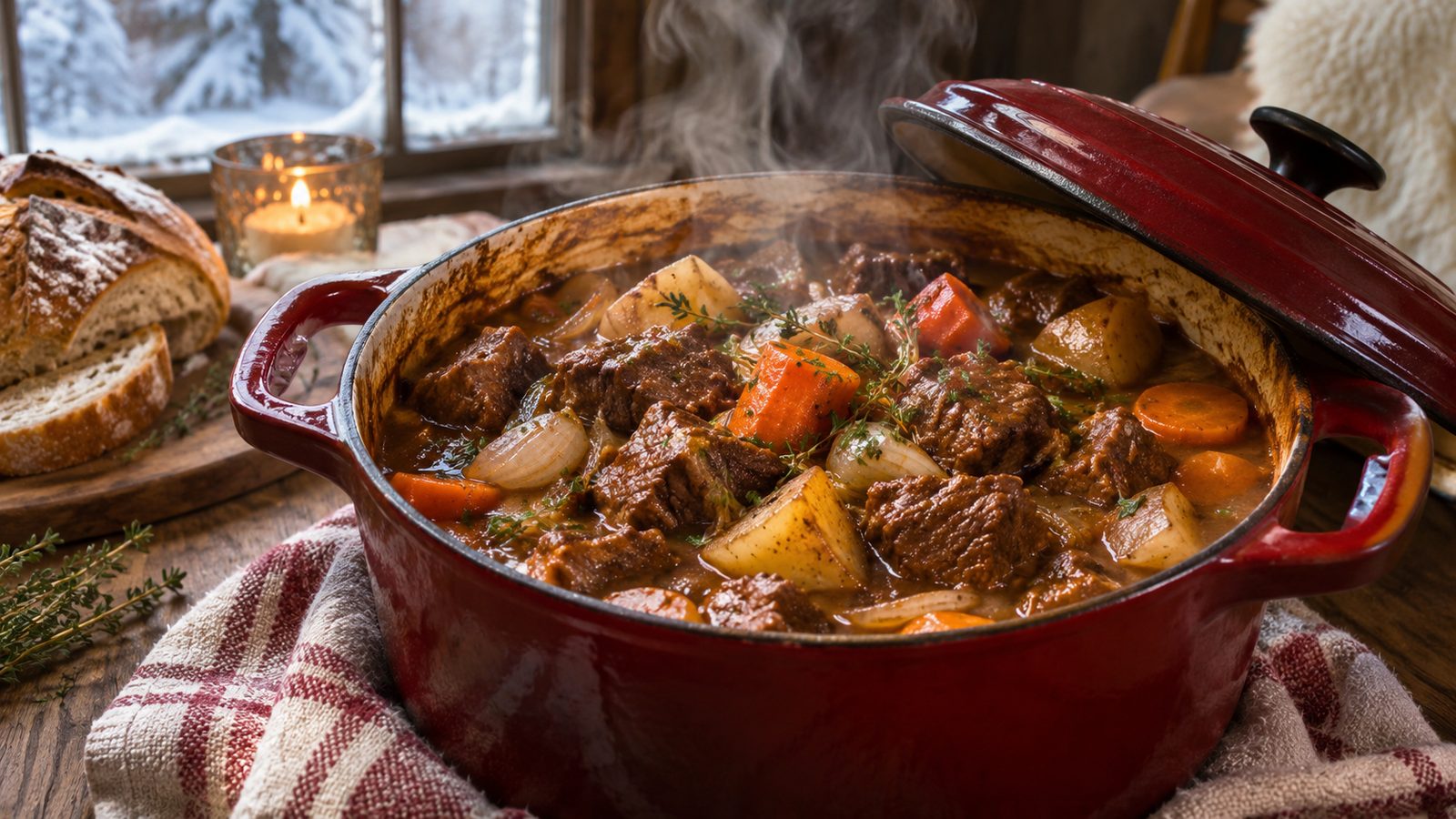
A good recipe for venison casserole turns lean deer meat into a tender, comforting dinner with a deeply flavored gravy. The secret is browning the meat first, then cooking it slowly with vegetables and broth. This version uses familiar US ingredients, Fahrenheit temperatures, and a Dutch oven. Quick answer: Brown cubed venison in batches, soften the vegetables, and deglaze the pot with red wine. Add beef broth, herbs, and potatoes, then braise everything covered at 325°F. Cook until the meat becomes fork-tender and the gravy thickens, usually about two to two-and-a-half hours.
Venison Casserole at a Glance
| Detail | Information |
|---|---|
| Prep time | About 25 minutes |
| Cook time | 2 to 2½ hours |
| Total time | About 2¾ hours |
| Servings | 6 |
| Best venison cuts | Shoulder, neck, or packaged stew meat |
| Oven temperature | 325°F |
| Best cookware | 5- to 7-quart Dutch oven |
| Flavor profile | Savory, earthy, rich |
| Make ahead | Yes |
| Freezer friendly | Yes |
Why Slow Cooking Works So Well for Venison
Venison is much leaner than many common beef cuts. Stewing cuts can become tough when cooked quickly over high heat. Slow, moist cooking gives connective tissue time to soften. Shoulder, neck, and similar working muscles are particularly suitable for braising. Penn State Extension also notes that moist cooking methods help tenderize game meat. These economical cuts are often better choices than tender backstrap for a long casserole. Browning also matters because it builds flavor before the liquid enters the pot. Work in several batches so the meat develops a dark surface. Crowding the Dutch oven creates steam and slows proper browning.
Ingredients
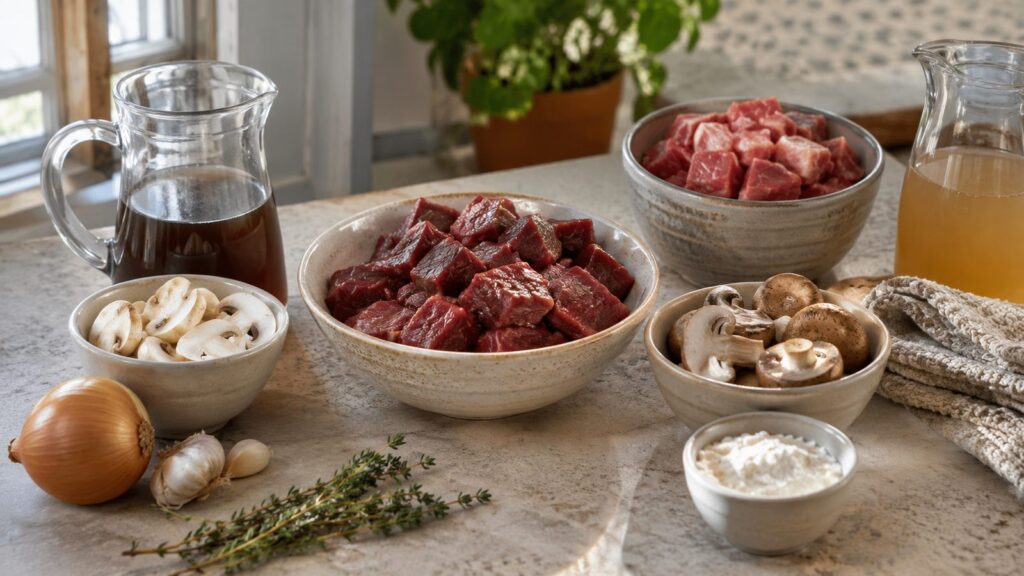
Use one-inch cubes so the meat cooks at a steady rate. Larger pieces can work, but they need additional braising time. Keep the vegetables fairly chunky so they remain intact.
- 2 pounds venison stew meat, cut into 1-inch cubes
- 1½ teaspoons kosher salt, divided
- ½ teaspoon ground black pepper
- 3 tablespoons all-purpose flour
- 2 tablespoons olive oil, divided
- 4 slices bacon, chopped
- 1 large yellow onion, chopped
- 3 medium carrots, cut into thick slices
- 2 celery ribs, sliced
- 8 ounces cremini mushrooms, halved or quartered
- 3 garlic cloves, minced
- 2 tablespoons tomato paste
- 1 cup dry red wine
- 3 cups low-sodium beef broth
- 1 tablespoon Worcestershire sauce
- 1 teaspoon dried thyme
- 1 teaspoon dried rosemary
- 2 bay leaves
- 1 pound Yukon Gold potatoes, cut into 1-inch pieces
- 1 tablespoon cornstarch, optional
- 1 tablespoon cold water, optional
- 2 tablespoons chopped fresh parsley
Dry red wine gives the gravy extra depth without making the dish taste strongly alcoholic. Cabernet Sauvignon, Merlot, or another dry red works well. If you have an opened bottle, Ventweek’s wine storage guide can help you judge whether it still tastes suitable for cooking.
How to Make This Recipe for Venison Casserole
1. Prepare and season the meat
Pat the venison dry with paper towels before seasoning it. Moisture prevents the surface from browning efficiently. Toss the cubes with one teaspoon salt, pepper, and flour. Let the coated meat stand while the Dutch oven heats. The flour helps create a browned crust and lightly thickens the sauce. Shake off any thick patches before the meat reaches the pan.
2. Cook the bacon
Place a large Dutch oven over medium heat. Add the bacon and cook until the fat renders. Remove the crisp pieces with a slotted spoon. Leave about two tablespoons of fat inside the pot. Add olive oil if the pan looks dry. The rendered fat gives lean game meat extra richness.
3. Brown the venison in batches
Increase the heat to medium-high. Add enough meat to cover the bottom without crowding it. Brown each batch on several sides, then transfer it to a plate. Repeat until every piece has developed good color. Add another splash of oil when needed. This step takes several minutes but makes the finished gravy taste fuller.
4. Cook the vegetables
Reduce the heat to medium. Add the onion, carrots, celery, and mushrooms to the Dutch oven. Cook them for about seven minutes, stirring occasionally. Add the garlic and tomato paste next. Cook them for another minute while stirring. The tomato paste should darken slightly before you add liquid.
5. Deglaze with red wine
Pour the wine into the hot Dutch oven. Scrape the browned bits from the bottom with a wooden spoon. Those caramelized pieces provide concentrated savory flavor. Simmer the wine for about three minutes. It should reduce slightly and smell less sharp. You can replace it with extra beef broth when avoiding alcohol.
6. Add the braising liquid
Return the venison and bacon to the pot. Add the beef broth, Worcestershire sauce, thyme, rosemary, and bay leaves. Stir until the tomato paste blends into the liquid. Bring everything to a gentle simmer. Cover the Dutch oven with its lid. Transfer it carefully to a 325°F oven.
7. Braise until nearly tender
Cook the covered casserole for about 90 minutes. Remove the pot and carefully stir the contents. Check the meat with a fork before adding the potatoes. The meat should be softening but not completely tender yet. Tough pieces need more time rather than higher heat. Return the covered pot to the oven if resistance remains strong.
8. Add potatoes and finish cooking
Stir the potatoes into the hot casserole. Cover the pot and bake for another 30 to 45 minutes. The finished venison should separate easily when pressed with a fork. Penn State Extension advises cooking soups, stews, and casseroles containing game meat to 165°F. Check the center of the dish with a reliable food thermometer before serving.
9. Adjust the gravy and seasoning
Remove the bay leaves before tasting the gravy. Add the remaining salt only when needed. Broth and bacon can already contribute considerable seasoning. For thicker gravy, combine the cornstarch with one tablespoon cold water. Stir the slurry into the simmering casserole gradually. Cook for several minutes until the sauce reaches your preferred consistency.
10. Rest and serve
Let the casserole rest for about ten minutes after leaving the oven. This short pause allows the gravy to settle slightly. Sprinkle fresh parsley over each serving. Serve the meal directly from the Dutch oven for a simple presentation. Warm bowls help keep the thick sauce hot. Add bread or green vegetables for a complete dinner.
Five Tips for More Tender Venison
The biggest mistake is assuming tougher meat needs hotter cooking. Higher heat can tighten lean muscle fibers before connective tissue softens. Time and moisture usually provide better results. Use these practical rules:
- Choose shoulder, neck, or labeled stew meat.
- Cut pieces to a similar one-inch size.
- Brown the meat without crowding the pan.
- Keep the braising liquid at a gentle simmer.
- Continue cooking until a fork enters easily.
Marinating overnight is optional rather than essential. Current recipes use both marinated and unmarinated approaches successfully. Slow braising remains the more important tenderness step.
What Can You Substitute?
Beef chuck is the easiest substitute when venison is unavailable. Use the same weight and follow the same basic cooking method. Its higher fat content can produce a richer final sauce. You can also change the root vegetables. Parsnips, turnips, rutabaga, or pearl onions work well. Add delicate vegetables later so they do not become mushy. For an alcohol-free casserole, replace the red wine with additional low-sodium beef broth. Add one teaspoon red wine vinegar near the end for acidity. Taste first because Worcestershire sauce already adds tang.
What to Serve With Venison Casserole
Mashed potatoes are a classic choice when you want extra comfort. They absorb the dark gravy and make a substantial winter meal. Skip the potatoes inside the casserole when serving a large portion of mash. Crusty bread is another practical option. Use it for soaking up the remaining sauce. Buttered egg noodles also pair well with the rich braising liquid. For balance, add something fresh or green beside the casserole. Roasted Brussels sprouts, green beans, or a simple salad work well. Their lighter flavors offset the richness of the meat and bacon.
Making It Ahead
This dish is well suited to advance preparation. The flavors often become more integrated after chilling overnight. Cool the casserole promptly before placing it in the refrigerator. When reheating, warm only the amount you plan to serve. Bring leftovers to 165°F before eating. Add a small amount of broth if the chilled gravy becomes too thick. Planning portions carefully also limits avoidable food waste. Ventweek has additional ideas in its article about reducing food waste and running a greener kitchen. Small storage habits can make large batches easier to manage.
How to Store Leftovers
Refrigerate the cooled casserole in shallow, covered containers. Penn State advises keeping unfrozen fresh game refrigerated and preventing raw-meat cross-contamination. Cooked leftovers should also return to refrigeration promptly. Freeze extra portions in airtight freezer containers for longer storage. Leave enough headspace for expansion and label every container. Thaw frozen portions safely in the refrigerator before reheating. Avoid sending bones, heavy vegetable scraps, or other hard waste into a kitchen disposal. Ventweek’s garbage disposal cleaning guide explains safer maintenance practices. A clean kitchen makes large-batch cooking easier to manage.
Common Venison Casserole Problems
Why is my venison still tough?
It probably needs more cooking time. Stewing cuts soften gradually during moist cooking. Give the pot another 20 to 30 minutes and test again. Avoid turning the oven much hotter. That approach can reduce the liquid before the meat becomes tender. Keep the Dutch oven covered while extending the cooking time.
Why is the gravy watery?
The lid may have trapped more moisture than expected. Simmer the uncovered casserole briefly on the stovetop. Stir occasionally until the sauce reduces. A cornstarch slurry offers a faster option. Add only a small amount at first. The gravy will continue thickening as it heats.
Why does the casserole taste too gamey?
Strong flavor can come from the particular animal, cut, or handling method. Bacon, mushrooms, tomato paste, herbs, and Worcestershire sauce help round the flavor. Proper field handling also matters for meat quality and food safety. Do not try to hide spoiled or poorly handled meat with strong seasonings. Discard meat with questionable storage history. Start with properly chilled, clean venison whenever possible.
Frequently Asked Questions
What is the best cut for a recipe for venison casserole?
Shoulder, neck, and packaged stew meat are excellent choices for long braising. These cuts contain connective tissue that softens during slow, moist cooking. Save naturally tender loin or backstrap for faster cooking methods.
Do you need to soak venison before making a casserole?
No, soaking is not required for a successful result. A marinade can add flavor, but slow cooking performs most of the tenderizing work. Properly handled fresh venison can go directly into the recipe after trimming.
Can I make venison casserole without wine?
Yes, replace the wine with the same amount of beef broth. Add a little red wine vinegar near the end for balance. Start with one teaspoon and adjust after tasting.
Can you make this in a slow cooker?
Yes, brown the venison and vegetables before transferring them to the slow cooker. Cook until the meat becomes fork-tender. Add potatoes late enough to prevent them becoming overly soft.
Can I freeze it?
Yes, this dish freezes well after cooking and cooling. Pack individual portions in airtight containers for easier reheating. Thaw them in the refrigerator before warming thoroughly.
A Hearty Dinner Worth Cooking Slowly
A dependable casserole needs patience more than complicated ingredients. Brown the venison well, keep enough liquid in the pot, and allow tougher cuts time to soften. Those simple choices produce tender meat and a savory gravy. This venison casserole also works well for hunters managing a freezer full of stew cuts. Make a large batch, refrigerate tomorrow’s portion, and freeze anything you will not use soon. Serve it with mashed potatoes or crusty bread for a satisfying cold-weather dinner. —